
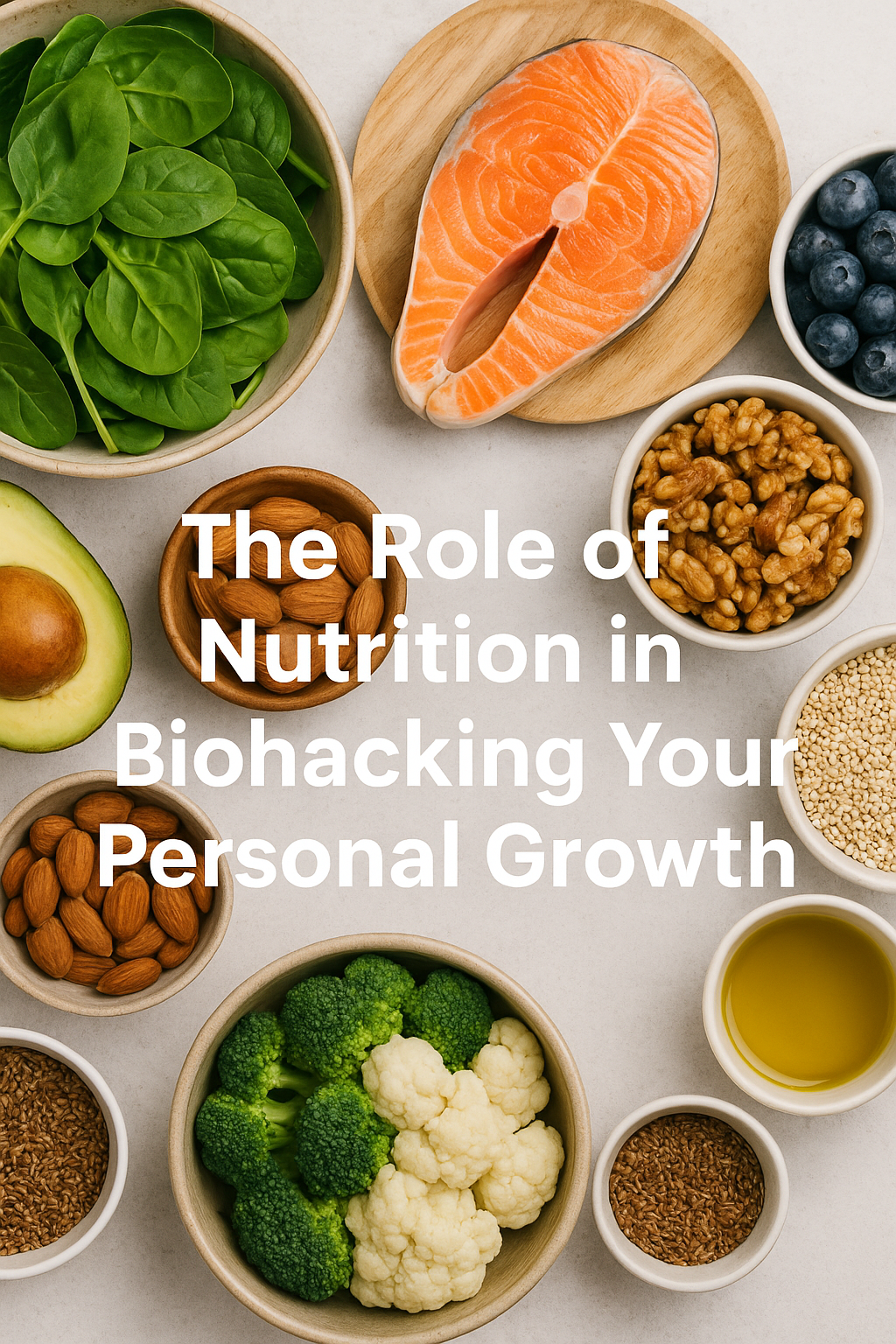
When people think of personal growth, they often focus on reading books, setting goals, or practicing mindfulness. While these are powerful tools, one of the most overlooked aspects of self-improvement is nutrition. What you eat directly influences your mood, energy levels, focus, and even resilience in stressful situations. For biohackers, food isn’t just fuel—it’s a tool for optimization.
In this article, we’ll explore how nutrition can become a powerful biohacking strategy to unlock higher levels of productivity, clarity, and personal growth.
Why Nutrition Matters for Personal Growth
Your brain and body rely on nutrients to function properly. When you eat a nutrient-dense diet, you enhance:
- Focus and productivity – Stable blood sugar levels and the right vitamins help your brain stay sharp.
- Emotional balance – Certain foods regulate mood and reduce stress.
- Energy levels – Proper nutrition prevents fatigue and keeps you consistent with your daily habits.
- Resilience – Nutrients like omega-3s and antioxidants support brain health and recovery.
Poor nutrition, on the other hand, often leads to brain fog, mood swings, and procrastination—all major blockers to personal growth.
The Biohacker’s View of Food
Instead of following fad diets, biohackers treat food as data. They test different nutritional strategies and measure how their body responds. This approach transforms eating from a passive routine into a personal experiment.
Questions a biohacker might ask:
- Which foods give me the most sustained energy?
- Do certain meals improve or decrease my focus?
- How do I feel emotionally after eating sugar or processed foods?
- Which nutrients am I possibly lacking?
By asking these questions, you become aware of how food impacts performance in real time.
Step 1: Prioritize Whole, Nutrient-Dense Foods
A biohacker’s foundation is clean, nutrient-rich food. This includes:
- Vegetables and fruits – Rich in vitamins, minerals, and antioxidants.
- Lean proteins – Eggs, chicken, fish, legumes, or plant-based options for muscle repair and neurotransmitter production.
- Healthy fats – Avocados, nuts, seeds, and olive oil to fuel the brain.
- Complex carbohydrates – Whole grains, quinoa, and sweet potatoes for stable energy.
These foods provide the raw materials your body needs to thrive mentally and physically.
Step 2: Eliminate Energy Killers
Not all foods are equal. Some drain energy, cloud thinking, and slow growth. Common examples:
- Refined sugar – Causes spikes and crashes in energy.
- Highly processed foods – Lack nutrients and often increase inflammation.
- Trans fats and excessive fried foods – Negatively impact brain health.
- Excess caffeine – May boost focus temporarily but often leads to crashes or anxiety.
A biohacker eliminates or minimizes these foods to create a stable foundation for personal growth.
Step 3: Experiment with Eating Patterns
Beyond what you eat, when you eat also affects performance. Biohackers test eating patterns like:
- Intermittent fasting – Skipping breakfast or extending fasting periods to improve focus and reduce brain fog.
- Time-restricted eating – Eating all meals within an 8-10 hour window to regulate energy.
- Balanced meal timing – Eating smaller, consistent meals to avoid energy dips.
Everyone’s body responds differently, so experimentation is key.
Step 4: Hydration as a Growth Hack
Dehydration is one of the most common performance killers. Even mild dehydration reduces focus, mood, and memory. Biohackers track water intake, often aiming for 2–3 liters daily, adjusted to activity levels. Adding electrolytes or mineral-rich water can further improve hydration efficiency.
Step 5: Use Supplements Wisely
While food should come first, biohackers sometimes use supplements to fill nutritional gaps. Examples include:
- Omega-3 fatty acids – For brain health and mood.
- Magnesium – For relaxation, stress reduction, and better sleep.
- Vitamin D – Supports mood and energy, especially for those with limited sun exposure.
- Probiotics – To support gut health, which is directly linked to mental health.
Supplements are not a replacement for real food but can support optimization when used strategically.
Step 6: Track Your Nutrition and Results
To truly biohack nutrition, tracking is essential. This might include:
- Food diaries – Writing down what you eat and how you feel after.
- Apps – Tools like MyFitnessPal or Cronometer track nutrients and calories.
- Wearables – Some advanced trackers provide glucose monitoring to see how food affects energy.
By tracking both intake and outcome, you can identify patterns and adjust accordingly.
Step 7: Optimize for Brain Performance
Nutrition plays a massive role in mental clarity and learning—critical for personal growth. Foods that biohackers prioritize for brain health include:
- Blueberries – Packed with antioxidants that improve memory.
- Dark chocolate (70%+) – Boosts focus and blood flow to the brain.
- Fatty fish (salmon, sardines, mackerel) – Provide omega-3s for brain function.
- Green tea – Contains L-theanine for calm focus.
- Nuts and seeds – Provide magnesium and vitamin E for cognitive support.
By including these foods, biohackers support not just the body but also the mind.
Step 8: Listen to Your Body
Perhaps the most important biohacking principle is self-awareness. What works for one person may not work for another. Biohackers listen closely to their body’s signals after meals—energy levels, mood shifts, and digestion—and adjust nutrition accordingly.
Step 9: Combine Nutrition with Other Growth Practices
Nutrition works best when combined with other personal growth strategies. For example:
- Eating a brain-boosting breakfast before deep work sessions.
- Staying hydrated before workouts to maintain stamina.
- Using supplements like magnesium to improve sleep quality and morning productivity.
Food is not separate from growth; it’s the foundation that supports every other practice.
Final Thoughts
Nutrition is one of the most powerful and underrated tools for biohacking personal growth. By choosing nutrient-dense foods, eliminating energy-killing meals, experimenting with eating patterns, and tracking results, you can turn your diet into a system for clarity, focus, and resilience.
Remember, biohacking nutrition is not about perfection—it’s about curiosity, experimentation, and building a way of eating that supports your best self. Start small, track your progress, and refine as you go. Over time, you’ll notice your energy, focus, and personal growth accelerate like never before.