
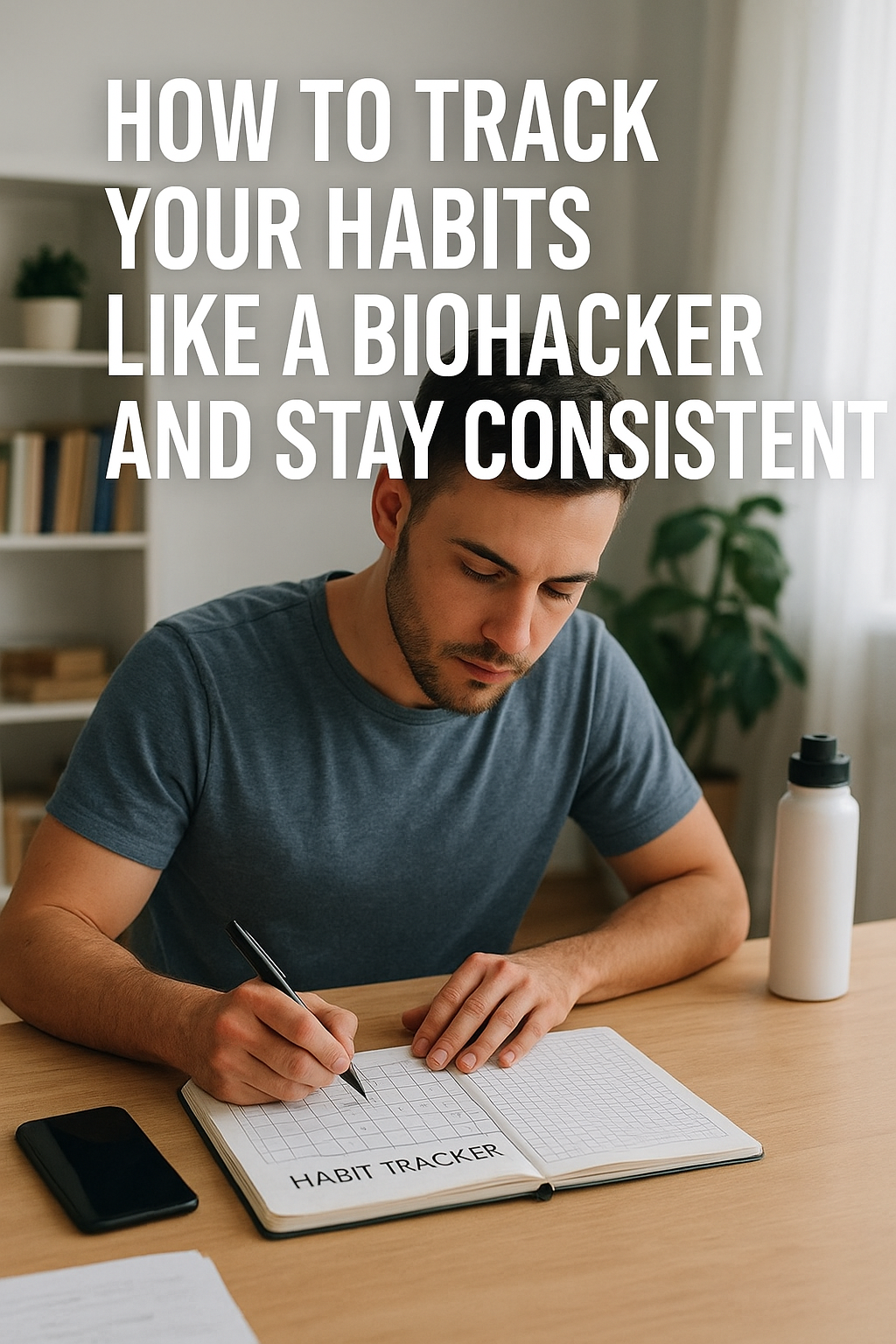
Building better habits is one of the most powerful ways to improve your life. Whether it’s exercising more, eating healthier, or meditating daily, consistent habits shape your identity and results over time. The problem is that most people struggle to stay consistent. They start strong but quickly lose motivation. This is where biohacking principles come in—using data, feedback, and simple hacks to track habits effectively and make consistency easier.
In this article, you’ll learn how biohackers track habits, measure progress, and design systems that almost guarantee long-term success.
Why Habit Tracking Matters
Tracking your habits may sound boring, but it’s one of the most underrated tools for personal growth. Here’s why it works:
- Awareness – You can’t improve what you don’t measure. Tracking reveals what you’re really doing, not what you think you’re doing.
- Motivation – Seeing progress, even small wins, builds momentum and motivates you to continue.
- Accountability – When your habits are visible, it’s harder to ignore them.
- Clarity – Habit tracking helps identify patterns, like what triggers good days versus bad days.
In short, tracking habits shifts change from guesswork into a measurable, repeatable process.
The Biohacker’s Approach to Habit Tracking
Biohackers see habit tracking as an experiment. Instead of just setting vague goals, they gather data, analyze results, and adjust until they find what works best for their lifestyle. This approach makes personal growth scientific rather than emotional.
A biohacker asks:
- What is the smallest, simplest action I can track?
- How can I measure progress objectively?
- How do I test different variables to see what makes habits easier or harder?
By thinking like a scientist of your own life, you gain control over habits that previously felt unpredictable.
Step 1: Define Clear, Measurable Habits
The first step is choosing the right habits. Instead of vague goals like “exercise more” or “eat healthier,” define clear actions such as:
- Do 20 push-ups each morning.
- Drink 2 liters of water daily.
- Meditate for 10 minutes before bed.
Clear and measurable habits are easier to track, and they give you specific wins to celebrate.
Step 2: Choose Your Tracking Method
Biohackers use different tools to track habits depending on their preferences:
- Analog trackers – Simple pen and paper, habit journals, or printed calendars where you mark an “X” each day you complete the habit.
- Digital apps – Tools like Habitica, Streaks, or HabitBull offer reminders, charts, and progress analytics.
- Spreadsheets – For data enthusiasts, spreadsheets allow more customization and long-term pattern analysis.
- Wearables – Smartwatches and fitness trackers automatically log sleep, steps, or workouts.
The key is consistency. Pick the method that feels effortless for you.
Step 3: Start Small and Build Momentum
One of the biggest mistakes in habit-building is trying to do too much too soon. A biohacker knows the value of starting small. For example, if your goal is to run daily, start with tracking a 5-minute jog. If you want to meditate, start with 2 minutes.
Small wins compound into big results. As author James Clear says, “You do not rise to the level of your goals, you fall to the level of your systems.” Tracking small, repeatable actions ensures your system is sustainable.
Step 4: Use Feedback Loops
Feedback loops are a cornerstone of biohacking. This means creating a system where you can quickly see results and adjust. Examples:
- If you’re tracking hydration, log your water intake daily and note how your energy feels.
- If you’re tracking focus, compare productivity on days when you complete your morning routine versus when you skip it.
- If you’re tracking exercise, measure improvements in endurance or strength every few weeks.
This constant feedback keeps you engaged and allows you to refine habits intelligently.
Step 5: Stack Habits with Triggers
Another powerful hack is habit stacking, where you link a new habit to an existing one. For example:
- After brushing your teeth, meditate for 2 minutes.
- After brewing coffee, write down three goals for the day.
- After lunch, take a 10-minute walk.
By using existing routines as triggers, habits become automatic and easier to maintain. Tracking habit stacks also helps you see which pairings are most effective.
Step 6: Celebrate Small Wins
Biohackers emphasize the importance of positive reinforcement. Every time you track a habit successfully, celebrate it—even if it’s just checking a box or saying “yes, I did it.” Over time, your brain associates the habit with reward, making it stick.
Step 7: Review Weekly and Adjust
A powerful habit-tracking system includes regular reviews. At the end of each week, ask:
- Which habits did I complete most consistently?
- Which ones felt like a struggle?
- What obstacles came up, and how can I adjust?
Biohacking isn’t about perfection—it’s about iteration. Reviewing your progress allows you to adapt rather than quit when habits get difficult.
Step 8: Use Accountability Tools
For some people, sharing progress with a friend, coach, or community provides the extra accountability needed. Apps and online groups allow habit-sharing, where you post streaks and celebrate together. Social accountability multiplies motivation and reduces the risk of giving up.
Step 9: Gamify the Process
Gamification is another biohacking trick. Many apps turn habit tracking into a game with streaks, points, or levels. Even without apps, you can gamify by creating personal challenges:
- “Can I complete this streak for 30 days?”
- “If I finish this week strong, I reward myself with a favorite activity.”
Turning habits into a game makes them fun rather than a chore.
The Long-Term Payoff of Habit Tracking
Over time, tracking habits builds self-awareness and self-trust. You begin to see yourself as someone who follows through. This shift in identity is the true biohack—it’s not just about drinking water or exercising, but about becoming the type of person who shows up consistently.
Every tracked habit compounds into long-term transformation. You’ll make fewer excuses, waste less time, and feel more control over your life.
Final Thoughts
Tracking habits like a biohacker isn’t about being perfect. It’s about collecting data, experimenting with small tweaks, and finding what works for you. By defining clear habits, using tracking tools, reviewing progress, and stacking wins, you’ll build consistency that lasts.
Remember: biohacking is about optimization, not obsession. Stay flexible, enjoy the process, and watch your habits slowly reshape your identity and future.