
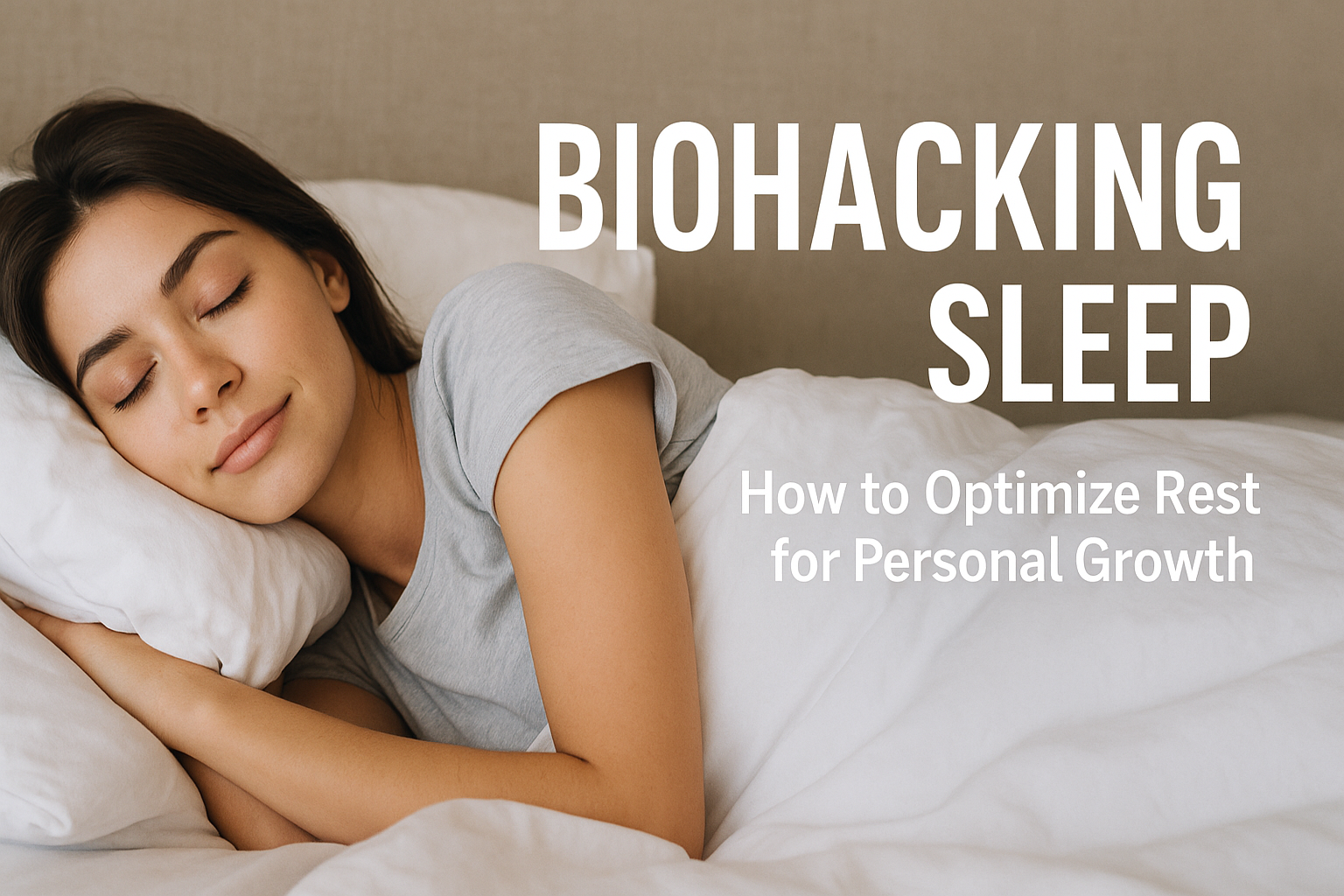
Sleep is often underestimated when it comes to personal development. Many people believe that working longer hours or sacrificing rest will help them achieve more. In reality, sleep is one of the most powerful biohacks available. By optimizing your sleep, you can improve memory, decision-making, focus, emotional balance, and even physical health.
If you want to grow personally and professionally, learning how to sleep smarter—not just longer—is essential. This article explores practical biohacks to help you get the most out of your rest.
Why Sleep Matters for Personal Growth
Sleep is not just downtime. During deep sleep, your body repairs tissues, balances hormones, and consolidates memories. Without quality rest, you may:
- Struggle with concentration and creativity.
- Feel more stressed and less emotionally resilient.
- Experience low energy that prevents you from building new habits.
- Face higher risks of illness, weight gain, and burnout.
Optimizing sleep is like upgrading your brain’s operating system—it makes every other area of life easier.
Common Sleep Disruptors
Before applying biohacks, it’s helpful to identify what might be disturbing your sleep:
- Excessive screen time before bed (blue light delays melatonin release).
- Caffeine or alcohol consumed late in the day.
- Irregular sleep schedules.
- Stress or overthinking at night.
- Poor sleep environment (too much noise, light, or uncomfortable bedding).
Eliminating these disruptors is the first step toward deeper, more restorative sleep.
Biohacks for Better Sleep
1. Create a Sleep-Friendly Environment
Your bedroom should be a place of rest and recovery. To optimize it:
- Keep the room cool (around 18–20°C).
- Make it dark with blackout curtains or a sleep mask.
- Reduce noise with earplugs or a white noise machine.
- Invest in a quality mattress and pillow that support your posture.
2. Align with Your Natural Rhythm
Our bodies have a natural circadian rhythm. To sync with it:
- Wake up and go to bed at the same time every day, even on weekends.
- Get morning sunlight exposure to regulate your internal clock.
- Avoid bright lights and screens at least one hour before bedtime.
3. Evening Wind-Down Rituals
A relaxing routine helps signal to your body that it’s time to sleep. Examples include:
- Reading a physical book.
- Journaling thoughts to release mental stress.
- Gentle stretching or yoga.
- Listening to calming music or nature sounds.
4. Biohack with Nutrition
What you eat influences sleep quality. Try these adjustments:
- Avoid heavy meals late at night.
- Limit caffeine after 2 p.m.
- Add sleep-promoting foods like bananas, almonds, chamomile tea, and warm milk.
- Consider supplements such as magnesium or L-theanine for relaxation.
5. Exercise Smart
Regular physical activity supports better sleep, but timing matters.
- Morning or afternoon exercise improves energy during the day and helps you sleep deeper at night.
- Intense workouts late at night may overstimulate the body and delay sleep.
6. Use Technology Wisely
Ironically, while screens harm sleep, certain technologies can also improve it. For example:
- Sleep-tracking devices (rings, watches, or apps) help you monitor patterns.
- Blue-light blocking glasses reduce digital strain in the evening.
- Smart alarm clocks can wake you during lighter sleep phases, making mornings easier.
7. Manage Stress and Overthinking
Stress is one of the biggest enemies of sleep. To reduce nighttime anxiety:
- Practice mindfulness meditation.
- Try breathing techniques such as 4-7-8 breathing.
- Write down a to-do list for the next day so your mind feels clear.
Advanced Sleep Biohacks
For those who want to experiment further:
- Cold exposure: Taking a cool shower before bed lowers core temperature.
- Aromatherapy: Scents like lavender or sandalwood can promote relaxation.
- Sleep restriction therapy: Limiting time in bed to only actual sleep can reset poor habits.
Sleep and Personal Development
When you sleep better, you think better. High-quality rest boosts problem-solving, creativity, and emotional control—all crucial for personal growth. It also strengthens discipline, since you’ll have more energy to follow through on habits like reading, learning, or exercising.
Think of sleep as the ultimate productivity tool: the better you recover, the stronger you perform in every area of life.
Final Thoughts: Make Sleep a Priority
Biohacking sleep doesn’t mean sleeping less—it means sleeping smarter. By improving your environment, aligning with your natural rhythm, and adopting healthy evening rituals, you can transform your nights into powerful tools for growth.
Instead of treating sleep as wasted time, see it as an investment. Every hour of quality rest fuels a sharper, more resilient, and more productive version of yourself.