
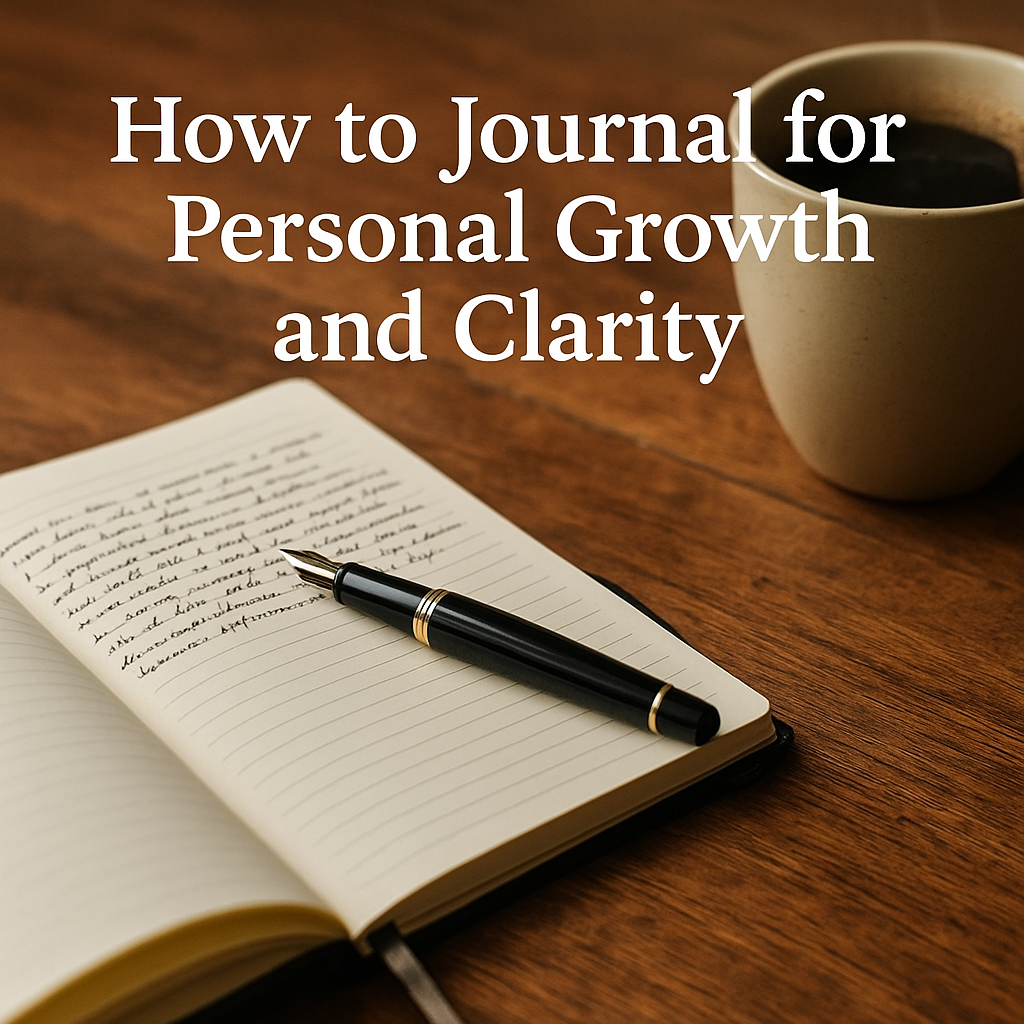
Journaling isn’t just about recording events—it’s a powerful tool for self-discovery, emotional clarity, and personal transformation. Whether you’re navigating stress, pursuing a goal, or feeling stuck, journaling can help you sort your thoughts, process emotions, and reconnect with your inner voice.
The best part? You don’t need to be a “writer” to benefit from journaling. All you need is honesty, a pen, and a few minutes of your time.
In this article, you’ll learn how to start journaling with intention and how it can accelerate your personal growth.
Why Journaling Works
Writing helps you:
- Slow down your thoughts
- Identify recurring patterns and beliefs
- Process emotions without judgment
- Set goals and track progress
- Strengthen self-awareness and decision-making
In short, journaling turns your inner world into something you can see, explore, and transform.
Step 1: Choose Your Format
There’s no right or wrong way to journal. Choose what feels easiest for you.
Options:
- Paper journal – tactile, distraction-free, and intimate
- Digital journal – fast, searchable, and easy to back up
- Voice notes – useful if writing feels overwhelming
- Guided apps – offer prompts and structure
The best format is the one you’ll actually use.
Step 2: Create a Simple Routine
Consistency builds the habit.
Try:
- Journaling for 5–10 minutes each morning or evening
- Keeping your journal by your bed, coffee maker, or desk
- Setting a recurring reminder or timer
- Pairing journaling with an existing habit (like tea or meditation)
Small routines build strong momentum.
Step 3: Use Prompts to Spark Insight
Not sure what to write? Start with a prompt.
Try:
- “What do I need today?”
- “What’s been on my mind lately?”
- “What am I avoiding?”
- “What’s one thing I’m grateful for right now?”
- “What limiting belief am I ready to let go of?”
Prompts bypass overthinking and guide you straight to clarity.
Step 4: Don’t Edit or Judge—Just Write
Your journal is a judgment-free zone. It’s not about grammar, spelling, or making sense to anyone else.
Let it be messy, raw, and real.
Write like no one is watching—because they aren’t.
Try:
- Stream-of-consciousness (write whatever comes to mind)
- Bullet points or lists
- Mind maps or sketches if you’re visual
Authenticity beats perfection every time.
Step 5: Reflect Without Obsessing
Once you’ve written, you can choose to reflect—or just release.
If you want to look back:
- Notice patterns in your thinking or behavior
- Highlight insights, goals, or emotions that stand out
- Use your entries to track growth over time
Just avoid overanalyzing. The point is connection—not criticism.
Step 6: Use Journaling to Reframe Negative Thoughts
When self-doubt or negativity creeps in, journaling helps you pause and challenge the thoughts.
Write down:
- The negative thought
- Why you think it’s coming up
- An alternative, more compassionate belief
- One action you can take to support that new belief
This rewires your mindset over time.
Step 7: Set Goals and Track Progress
Use your journal to move forward—not just reflect.
Try:
- Writing down monthly intentions
- Breaking goals into steps and tracking progress
- Journaling about wins (big or small)
- Reflecting on setbacks and what you learned
Progress feels more real when it’s recorded.
Step 8: Make It Sacred (and Enjoyable)
Journaling isn’t a chore—it’s a ritual of self-respect.
Create a vibe:
- Use a favorite notebook or pen
- Light a candle or sip tea
- Put on calming music or journal outside
- Keep your space distraction-free
When journaling feels nourishing, you’re more likely to return.
Step 9: Let It Be What You Need—Not What It “Should” Be
Some days your journal will be deep and insightful. Other days it’ll be random scribbles or a to-do list.
That’s okay.
You’re not writing for performance. You’re writing for connection—with yourself.
Let go of rules. Show up as you are.
Your Journal Is a Mirror and a Map
Journaling helps you see yourself more clearly. It reflects who you are today—and it helps you shape who you want to become.
Start here:
- Pick a notebook, app, or voice tool
- Choose one simple prompt (like “How do I feel right now?”)
- Set a 5-minute timer and write freely
- Repeat tomorrow—no pressure, just presence
Your clarity is already inside you. The pen just helps bring it out.