
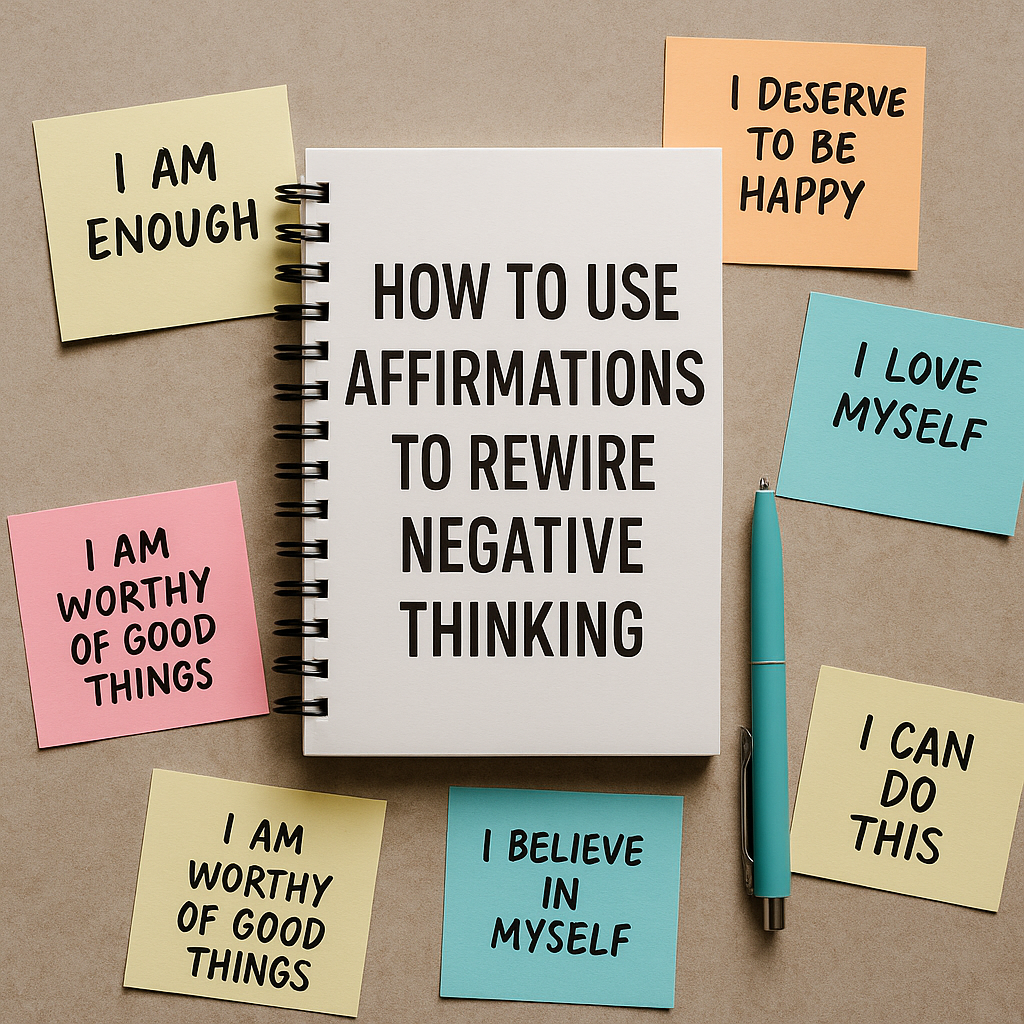
Your thoughts shape your reality. If your inner dialogue is filled with doubt, fear, or negativity, it creates invisible limits on what you believe you can do or become. But the good news is: your brain is changeable. You can rewire your thinking—and affirmations are one of the most powerful tools to do that.
Affirmations are short, intentional statements that help you focus your mind, challenge negative patterns, and build a more supportive mindset. In this article, you’ll learn how to use affirmations effectively—not just as wishful thinking, but as a real strategy for personal growth.
Why Affirmations Work
Affirmations may seem simple, but they’re grounded in psychology and neuroscience. Here’s how they work:
- They redirect your focus toward what you want, not what you fear.
- They create new neural pathways when repeated consistently.
- They increase emotional resilience and self-efficacy.
- They challenge and replace automatic negative thoughts.
- They help you align your identity with your goals.
In short, affirmations help you believe in yourself—on purpose.
Step 1: Identify Your Negative Thought Loops
Before choosing affirmations, start by noticing what thoughts are holding you back.
Common negative patterns:
- “I’m not good enough.”
- “I always mess things up.”
- “I don’t deserve success.”
- “Nothing ever works out for me.”
- “I’ll never change.”
Write down your most frequent self-limiting beliefs. These are the patterns you’ll begin to rewire.
Step 2: Turn the Negative Into a Positive Statement
Now, take your negative thought and flip it into an empowering one. The goal isn’t to lie to yourself—it’s to create a more helpful perspective you’re willing to grow into.
Examples:
- “I’m not good enough” → “I am learning and growing every day.”
- “I can’t do this” → “I am capable of figuring things out.”
- “I’ll never be confident” → “Confidence is a skill I’m building.”
Start where you are—and speak to where you want to go.
Step 3: Keep Affirmations Short, Present, and Personal
Powerful affirmations follow this formula:
- Short and simple: easy to remember and repeat
- Present tense: state it as if it’s already true
- Positive framing: focus on what you do want
- Personal: use “I” or “My” statements
Examples:
- “I trust myself.”
- “I am worthy of love and respect.”
- “My potential is unlimited.”
- “I can handle whatever comes my way.”
Short phrases are easier for your subconscious mind to absorb.
Step 4: Use Repetition With Intention
Repetition is key. Your brain needs to hear something often before it accepts it as normal.
Try:
- Saying affirmations out loud in the morning
- Writing them in a journal daily
- Repeating them silently during moments of stress
- Recording your voice and listening during commutes or walks
The more frequently and intentionally you repeat them, the more powerful the effect.
Step 5: Feel the Emotion Behind the Words
Affirmations aren’t just words—they’re emotional anchors.
For them to work, you must connect with the feeling they represent.
As you say or write your affirmations:
- Visualize what it would look and feel like to believe them
- Stand tall, breathe deeply, and speak with conviction
- Smile or use gestures to reinforce the energy
The emotion is what helps encode the belief in your brain.
Step 6: Use Affirmations to Interrupt Negative Thinking in Real Time
When you notice yourself spiraling into self-doubt or fear, affirmations can help interrupt the pattern.
Try:
- Repeating “I am safe and in control” during anxiety
- Saying “This is temporary—I am stronger than this” during overwhelm
- Reminding yourself “I’ve done hard things before—I can do this too”
The goal is to interrupt the automatic reaction and replace it with intentional belief.
Step 7: Place Affirmations Where You’ll See Them Often
Environment shapes habit. Use physical and digital reminders.
Ideas:
- Sticky notes on your mirror, desk, or laptop
- Affirmation wallpapers on your phone
- Alarms or widgets that show a daily affirmation
- Affirmation cards in your wallet or bag
Each visual cue reinforces the mindset shift.
Step 8: Be Patient—This Is Mental Training
Just like physical training, changing your mindset takes time. Affirmations aren’t magic—they’re mental reps that gradually build new beliefs.
It may feel awkward at first. You might not believe the words right away. That’s okay. Keep showing up.
With time:
- Your self-talk softens
- Your inner critic quiets
- Your self-belief strengthens
That’s when true transformation begins.
Your Mind Believes What You Tell It Repeatedly
You don’t have to keep believing every negative thought your mind throws at you.
Affirmations give you the power to write a new narrative—one based on truth, possibility, and growth.
Start here:
- Write down one negative thought that limits you
- Create an empowering affirmation that challenges it
- Say or write that affirmation every day this week
- When doubt arises, speak your truth out loud
Your words shape your thoughts. Your thoughts shape your actions.
Speak with intention—and watch your confidence grow.